Where to Start With Octavia Butler: A Beginner's Reading Guide

My reading journey with the Queen of Science Fiction, the books that disturbed my peace, and why I think you should start with Kindred.
I'm still not quite sure how or where it happened, but somewhere along my reading journey, I stumbled onto Auntie Octavia Butler.
Yes, I call her Auntie Octavia. I hope that's okay with y'all.
Queen would also be fitting.
Visionary? Absolutely.
Prophet? After some of the things I've read, I'm not ruling it out.
Octavia E. Butler started publishing science fiction in the 1970s, writing Black women into stories and worlds at a time when neither science fiction nor publishing was exactly overflowing with people who looked like us.
And somehow, decades later, I found her.
I wish I had been an avid reader during her lifetime so I could have given her the flowers she most certainly deserved while she was here.
I wasn't.

So the best I can do is give them to her now.
And maybe introduce somebody else to her along the way.
If you've been wondering where to start with Octavia Butler, I've got you. From the unforgettable Kindred to the unsettling worlds of Wild Seed and Parable of the Sower, I'm sharing my reading journey, which books I recommend for beginners, and where you might want to go next.
Fair warning: my journey isn't finished.
Auntie has put me through enough already.
Where to Start With Octavia Butler: My Quick Reading Guide
If you're new to Octavia Butler and just want to know which book to pick up first, here's where I recommend starting based on the kind of stories you enjoy.
New to Octavia Butler? Start with Kindred.
My recommendation for first-time readers is Kindred. It's a standalone novel that blends historical fiction, time travel, and science fiction into a story that will stay with you long after you've finished reading.
You don't have to commit to an entire series, and you don't have to be a science-fiction reader to appreciate it.
Interested in immortality, shapeshifting, and power? Try Wild Seed.
Wild Seed was my introduction to Octavia Butler. It follows two immortal beings whose extraordinary abilities and opposing views on power and autonomy create one complicated relationship.
It's also an entry point into Butler's Patternist universe.
Love dystopian fiction? Pick up Parable of the Sower.
If you enjoy dystopian fiction that feels a little too close to reality, Parable of the Sower might be your book.
It follows a young Black woman trying to survive in a society experiencing environmental destruction, economic instability, and violence.
It's also the first book in the Earthseed series.
Now, if you want to know why I recommend these particular books, let me tell you what Auntie Octavia has put me through.
Who Was Octavia E. Butler?

Before I tell you what this woman has done to me, you should probably know who we're talking about.
Octavia E. Butler was an award-winning Black science-fiction author whose work explored race, gender, power, survival, hierarchy, humanity, and what happens when people are placed in circumstances that force them to confront who they really are.
She began publishing novels in the 1970s and went on to receive some of science fiction's biggest honors, including Hugo and Nebula Awards. She was also awarded a MacArthur Fellowship.
In other words, Auntie wasn't playing with us.
And after reading just a few of her books, I understand why.
Wild Seed: My First Octavia Butler Book

Patternist Series | Immortality | Shapeshifting | Power
My first stumble onto Octavia Butler was Wild Seed.
And this is where I realized that this woman tells a story differently.
Her writing can feel very straightforward. Gritty. Sometimes uncomfortable.
And incredibly hard to look away from.
Wild Seed introduces us to Anyanwu, an immortal woman with extraordinary abilities. She can heal herself and others, transform her body, and survive things that would kill an ordinary person.
She's powerful.
Then she meets Doro.
And quite frankly?
He ain't shit.
Doro is also immortal, except his immortality works very differently. He survives by transferring his consciousness into other people's bodies, killing the host in the process.
So that's pleasant.
Doro has spent generations selectively breeding people with unusual abilities in an attempt to create increasingly powerful descendants.
Then he finds Anyanwu.
And decides he wants her too.
What follows is this complicated battle between two incredibly powerful beings, except one of them has absolutely no problem using control, manipulation, and violence to get what he wants.
When I tell you this man is the epitome of stealing your peace, I am not exaggerating.
Anyanwu just wants to exist on her own terms, protect the people she loves, and maintain some control over her own life.
And Doro stays Doro-ing.
It is a fascinating story about power, autonomy, survival, and what happens when someone believes that because they cancontrol other people, they have the right to.
When I finished it, apparently my response was:
Let's read some more Octavia Butler.
I had no idea what I was getting myself into.
Kindred by Octavia Butler: The Book That Stayed With Me

Standalone | Time Travel | Historical Fiction | Science Fiction
Baby.
I have not recovered from Kindred to this day.
Dana is a Black woman living in 1976 California with her white husband, Kevin, minding her business in her own home.
And then one day, she is suddenly yanked out of her life.
No warning.
No explanation.
She finds herself somewhere she doesn't recognize and discovers a young white boy drowning.
She saves him.
Then, when Dana's own life is threatened, she's suddenly transported back home.
What in the entire hell just happened?
Eventually, Dana discovers that the boy is Rufus and that she is being transported back to the antebellum South whenever his life is in danger.
And her connection to Rufus is far more complicated than simply saving a little boy's life.
Which creates one of the most disturbing dilemmas I have ever encountered in a book.
Dana has to keep this boy alive.
But she's watching the little boy she saves grow into a man shaped by slavery and the power it gives him.
And she knows what kind of world she's helping him survive to participate in.
Excuse me, Auntie Octavia.
What exactly would you like this woman to do?
And that's what Kindred does so well.
It makes you ask questions that don't have comfortable answers.
What would I do if I were suddenly dropped into slavery?
Nothing, girl.
You would live as a slave.
We'd all like to imagine ourselves arriving in the 1800s with our 2026 attitudes, telling everybody exactly what we will and will not tolerate.
Okay.
And then what?
Butler strips away that fantasy very quickly.
Then there's the other impossible question:
Would I continue saving the life of someone I knew was becoming a terrible person if his survival was necessary for my own survival?
Well...
Yes.
Because I would like to exist.
But dang it.
And then Butler adds Kevin.
Kevin is white.
He loves his wife. He knows what slavery is. Obviously, he understands intellectually what happened to Black people.
But knowing about something from a safe distance and being confronted with what it actually means for the Black woman you love are two very different experiences.
And I'm going to stop right there.
Because y'all know I don't do spoilers.
Just know that Butler uses Dana and Kevin's experiences to add another layer to a story that already gives you plenty to think about.
I finished Kindred years ago.
I'm still thinking about it.
The Best Octavia Butler Book to Start With: Kindred
If you only take one recommendation from this entire post, this is it.
Start with Kindred.
First, it's a standalone.
I'm not asking you to commit to three books, four books, or an entire fictional universe before you even know if Auntie Octavia is for you.
Read one book.
Second, Kindred gives you such a good introduction to what I love about Butler's storytelling.
It's accessible.
It's uncomfortable.
It's thought-provoking.
It's absolutely amazing and disturbing at the same time.
And although time travel drives the story, you don't have to consider yourself a hardcore science-fiction reader to get into it.
The science-fiction element creates the impossible situation.
The people are what make it unforgettable.
Butler isn't just asking, What if a Black woman from the 1970s suddenly found herself living during slavery?
She's asking what that woman would have to do to survive.
What would happen to the person she believes herself to be?
What compromises would she make?
What would she endure?
Who would she protect?
And what happens when every available choice costs her something?
Read it.
And when you're finished staring at the wall trying to process what you just experienced, come back.
We'll talk.
Parable of the Sower: My Introduction to Butler's Dystopian Fiction

Earthseed Series | Dystopian Science Fiction | Climate Crisis | Survival
Right after the 2024 election, I decided it would be a wonderful time to read Parable of the Sower.
To this day, I don't know why I did that to myself.
Because Parable of the Sower begins in a near-future America devastated by climate change, economic instability, violence, and the breakdown of many of the systems people once relied upon.
The book was published in 1993.
And its story begins in 2024.
Ma'am.
Octavia.
MA'AM.
The story follows Lauren Olamina, a young Black girl living with her family in a walled community in California.
Outside those walls, society is unraveling.
Food and water are increasingly precious. Violence is everywhere. Climate change has transformed the environment. Poverty and inequality are rampant.
And Lauren knows their little community isn't going to protect them forever.
She's preparing for what's coming even when other people don't want to acknowledge that something is coming.
And eventually?
It comes.
From there, Parable of the Sower becomes a story of survival, adaptation, community, and Lauren's developing belief system, Earthseed.
But let me tell you what my experience reading it was like.
Every time something terrible happened, I would think:
Well, at least it can't get any worse.
Child.
It got worse.
Then I'd adjust.
Okay. We're here now. Surely this is rock bottom.
No.
It got worse.
Eventually, I stopped challenging Auntie Octavia because clearly she took it personally.
What disturbed me wasn't that Butler somehow predicted every detail of the future.
She didn't.
It was how recognizable some of the pressures in her imagined future could feel decades after she wrote about them.
And remember: I'm reading this book immediately after the 2024 election, already bringing my own thoughts and feelings about the world into the experience.
I did not choose peace.
I chose Octavia Butler.
And Octavia Butler said, Oh, you thought you were stressed before?
And No, I Still Haven't Read Parable of the Talents
There is a second book.
Parable of the Talents.

I own the knowledge that it exists.
I understand that I need to read it.
I have every intention of reading it.
Eventually.
It's been about two years.
I'm recovering.
Please respect my privacy during this difficult time.
Octavia Butler Reading Order: Where to Go Next
Here's the thing.
I've barely scratched the surface.
Octavia Butler wrote multiple series, standalone novels, and short fiction, which means I still have plenty of Auntie Octavia left to discover.
And I intend to.
If you're starting your own journey, here's an easy way to decide where you might want to go after your first Octavia Butler book.
This isn't a complete chronological reading order. It's simply where I recommend going based on the stories that interest you.
Want to Start With One Book?
Read Kindred.
You already know my answer.
It's a standalone novel, so you can experience Butler's storytelling without committing to a series.
And if you love historical fiction but don't typically read science fiction, this is where I would start.
Loved Wild Seed? Explore the Patternist Series
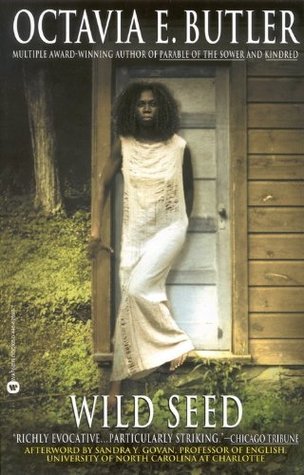
Wild Seed Book Cover 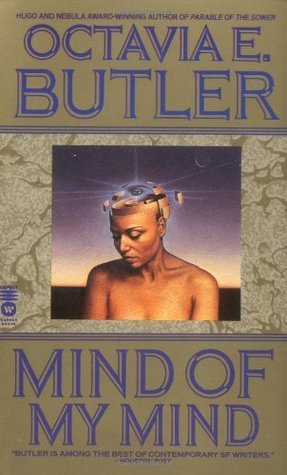
Mind of My Mind Book Cover 
Clay's Ark Book Cover 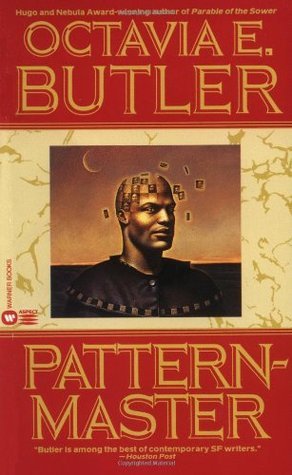
Patternmaster Book Cover
Keep going with the Patternist books.
If Doro disturbed your peace and apparently you would like him to continue doing so, there's more.
The Patternist series explores power, evolution, and the relationships between people with extraordinary abilities.
Wild Seed is an entry point into that universe, although the series also has a separate publication order.
Want More of Lauren's Story? Continue the Earthseed Series

Parable of the Sower Book Cover 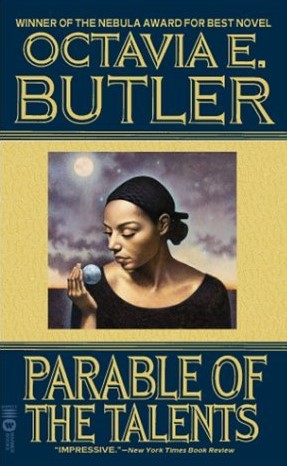
Parable of the Talents Book Cover
Read Parable of the Sower, followed by Parable of the Talents.
These two books make up the Earthseed series.
You can even read Talents before I do and come back to tell me...
Actually, don't.
I don't trust you not to spoil something.
Ready for Aliens? Try Lilith's Brood
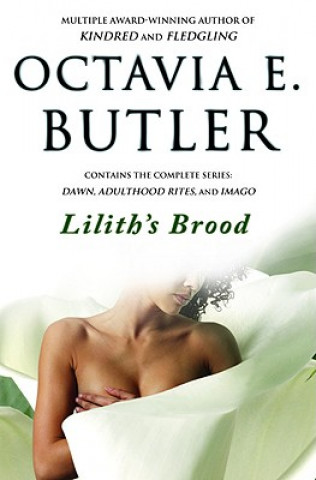
Lilith's Brood Book Cover 
Dawn Book Cover 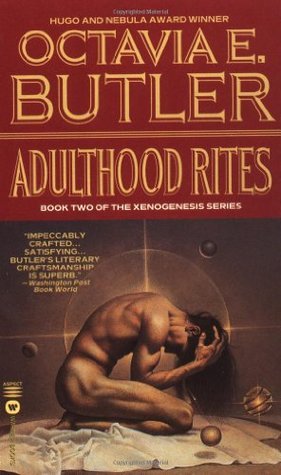
Adulthood Rites Book Cover 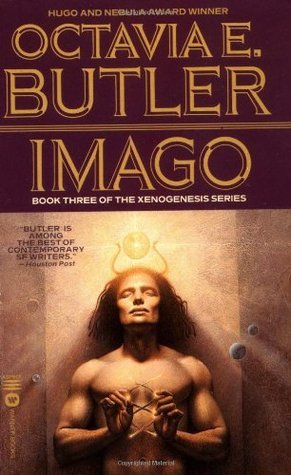
Imago Book Cover
The Xenogenesis trilogy, also collected as Lilith's Brood, is waiting for us.
The three books are:
Dawn
Adulthood Rites
Imago
I haven't gotten there yet, which means I still get to experience those books for the first time.
And considering my track record with this woman, I'm both excited and concerned.
Why I Keep Reading Octavia Butler
If you like science fiction, read Octavia Butler.
If you like dystopian fiction, read Octavia Butler.
If you like stories that make you uncomfortable in the best way, read Octavia Butler.
If you like books that force you to stop and ask yourself what you would do in an impossible situation, read Octavia Butler.
And if you like picking up a book written decades ago only to occasionally stop, stare into the distance, and wonder exactly what the author knew that the rest of us didn't...
Baby.
Meet Auntie Octavia.
Her stories can be gritty and disturbing. Her characters aren't always easy to love. The choices she gives them aren't always fair.
And maybe that's why I can't stop reading her.
She doesn't give you a comfortable place to hide.
She puts people into impossible situations and makes them choose.
Then she makes you live with their choices.
Giving Auntie Octavia Her Flowers

I wish I had discovered Oct avia Butler while she was still alive.
I wish I could have been one of the readers buying her books when they first hit the shelves, waiting for whatever strange, brilliant, and disturbing world she was going to create next.
I didn't get that opportunity.
But I can give her flowers now.
I can read her.
I can talk about her.
I can tell another Black woman who thinks science fiction isn't really her thing, Girl, try this one.
I can introduce another generation of readers to Anyanwu, Dana, and Lauren.
And I can keep making my way through the incredible body of work she left behind.
That's exactly what I intend to do.
I am committed to reading Auntie Octavia's entire catalog.
Just as soon as I finish picking my jaw up off the floor from the last one.
Now, let's talk books.
Have you read Octavia Butler? Which book was your introduction to her work, and which one would you recommend to someone just getting started?
And if you've read Parable of the Talents, please remember that this is a spoiler-free establishment.
I'm still recovering.


